Introducing Horse Sense
For me, good Horse Sense is all about being able to read and understand the horse, helping owners to better understand what their horse is communicating to them, in order to enhance their relationship and improve all round performance and safety. This approach unites all three aspects of my business: behavioural rehabilitation, training for all aspects of performance, and ridden coaching focusing on rider posture and balance.
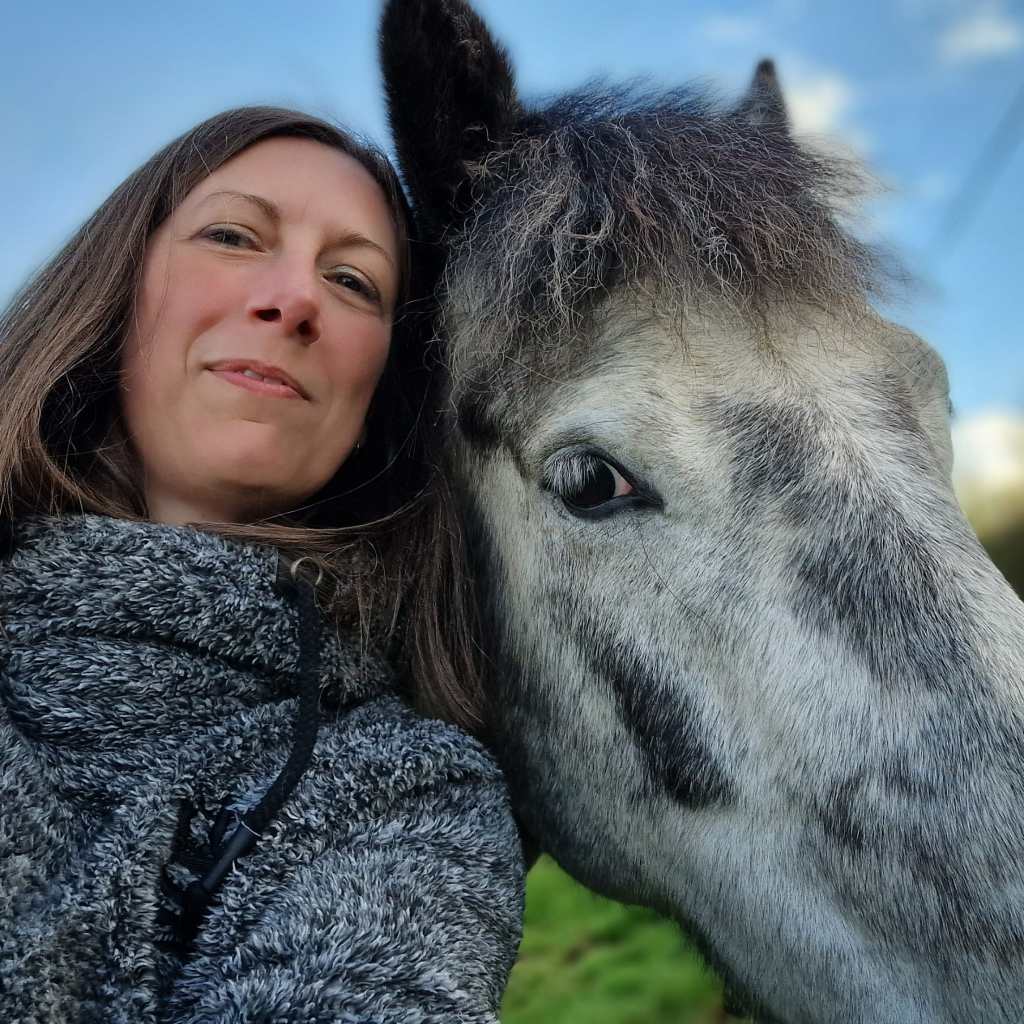
Behaviour Rehabilitation
Do you have a problem with your horse’s behaviour? If so, the best thing you can do is contact a registered Clinical Animal Behaviourist such as myself for assessment, treatment and support. I deal with all kinds of problems, from leading to loading, catching to clipping, biting to bridling, mounting, shoeing, kicking and everything in between, with a focus on trauma rehabilitation. Over the past twenty years I’ve worked with everything from simple problems that can be addressed in a matter of one or two sessions through to ‘untouchable’ rescues and severely traumatised horses that have required detailed and ongoing support. Unlike many behaviourists, I believe it is really important to provide ongoing support in the form of practical face to face sessions with clients, so I recommend a commitment to weekly or fortnightly sessions over a period of time appropriate to the nature and scale of the problem. Initial assessment is done via first contact (phone or message) followed by online assessment and questionnaire, followed by a practical assessment visit. Clients may take their own notes or request a written report (additional fee). Behavioural rehabilitation support sessions are classified as coaching sessions for fee purposes. A discount is available for block booking.
Changing behaviour in a horse requires patience and understanding, and, most of all, dedication on the part of the owner/ trainer. Often it seems like it is the human’s behaviour that has to change, in order to help the horse. This can be a very empowering experience and an opportunity for personal learning and growth. I always aim for clients to go away feeling that they have learned skills that they can apply to every horse, and not just the one with the problem.
Problem Prevention: working with the foal/ youngster
I also work with owners of young horses (from foals through to those ready for backing) in order to help prevent the development of problems. This involves regular lessons on groundwork and handling skills and equips the owner with tools that will help the horse
People have problems with their horse’s behaviour for a multitude of reasons. Often problems begin with how the horse is handled as a foal, how they are weaned, and the way in which they are backed and introduced to the riding process. These problems can then be maintained or even exacerbated by the way in which the horse is handled and managed, and the types of training techniques employed in attempts to cope with or solve the problem.
My approach focuses on understanding the root cause of the problem, rather than tackling the symptoms head on. When working with problems this leads to a longer lasting, more effective result. When working with the young horse, this understanding means that we can take steps to protect against the development of problems.

Coaching for Groundwork or Riding
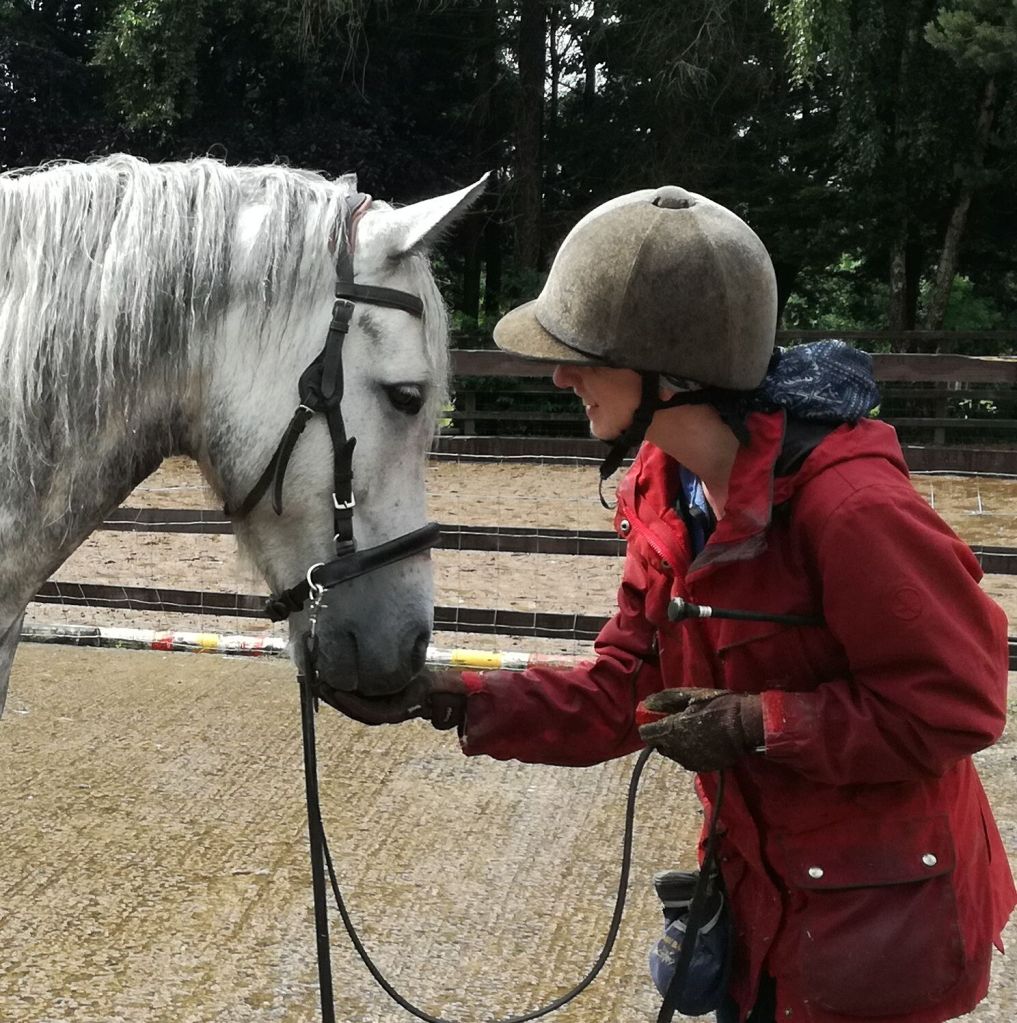
Join my group of weekly, fortnightly and monthly clients for regular individual and group coaching sessions. As you will have seen on the home page, I offer riding lessons focusing on rider balance, posture and weight. As a trainer, I can help riders with their horses’ development, showing them how to train new moves with minimum stress for all concerned. All horses and riders benefit from groundwork and I use my training experience to help everyone understand how to behave safely and with manners on the ground. I also teach owners how to help their horses become braver, less spooky and more balanced emotionally. From this we can introduce classical in hand work that will benefit ridden work. I also teach the effective use of positive reinforcement in training. As one of the UK’s longest established horse trainers using ‘clicker training’ I focus on helping owners understand how the clicker as a tool can be easily integrated in to day to day training in a sensible and safe way. I don’t espouse ‘clicker training’ as a method, instead I like to emphasise the importance of understanding emotion, body language and how to train well!
Workshops and Talks at your Yard or for your Club
I regularly run workshops and talks on a wide range of topics- follow my blog and you can keep informed of the latest dates and venues.
Training with the Clicker
I chose not to use the term ‘clicker training’ deliberately, since this implies a method or rigid way of doing things. I first began using a clicker in horse training in 1999, at a time that few people had even heard of it, and even fewer were applying it to horses. I began training others to do the same shortly after, and ran my first ‘Introduction to the Clicker’ workshop in 2004.
Over the last twenty years, this approach has grown in popularity, and unfortunately with that come lots of problems, most of which arise through a lack of understanding of how the clicker really works. At the end of the day, it’s just a tool, and can only be applied well if the trainer has a good grasp of learning, motivation, emotion and behaviour. Good training is good training, no matter what tools the trainer utilises.
I like to teach what I call good Horse Sense. This involves helping horse people understand how learning really works in the context of how the horse feels, and through that, the skilled application of the Clicker.
Correctly used, the idea of using a clicker, or any other kind of marker signal, can enhance training, leading to happier, safer, more engaged horses.
I utilise this a lot with my clients, helping them to see how it can be integrated into the training they currently do, without them having to make huge changes.
If you are interested in learning more about working with the Clicker, you might like to book a training session with me to get started https://spencehorsesense.com/contact/
If you are local I can come and work with you and your horse, or you can come and work with my horses. If you’re a bit farther away, we can do online coaching sessions.
For current fees etc see https://spencehorsesense.com/fees/
Or you might be interested in my online courses on
https://www.psy-htec.com/getting-started-with-the-clicker
and
https://www.psy-htec.com/horse-sense-practical-guide-for-training-with-the-clicker
However, before you begin, I do recommend my course on
https://www.psy-htec.com/learning-theory-in-context

Riding Coaching
I find that the principles of classical riding combine beautifully with the lessons that I learned throughout my education, both in terms of biomechanics and understanding emotion, motivation, learning and behaviour. My driving aim is for coaching sessions to be positive and enjoyable for both horse and rider.
All my coaching has a strong foundation in the use of positive reinforcement (for people and horses!) so if clients are interested I am always delighted to integrate reward based training with a marker (clicker training) into sessions.
Following years of back problems and pain, I ended up in my early twenties having lessons in the Alexander Technique to improve my posture and the way in which I used my back. Through these lessons, I was incredibly fortunate to meet Gloria Pullan, MSTAT, whose main interest is classical dressage, particularly in the old style of the Spanish Riding School of Vienna. She had extensive tuition with two former pupils of the School, Charles Harris and Daniel Pevsner, both Fellows of the BHS. Daniel was also a student of the great classical master, Nuno Oliveira, and a teacher of the Alexander Technique.
Gloria transformed both my riding and my coaching. I always believed that riding should be about lightness and balance, and harmony of horse and rider. Gloria was the first trainer to help me truly experience this, instead of just reading about it. With her, I really learned to develop my feel and ability to tune into the balance of both horse and rider.
I’ve been coaching this way now for over twenty years and I love helping riders develop patience, posture and feel, leading to balance and softness in the horse. For the last number of years I’ve also been focusing on classical in hand work as a way of helping develop the horse on the ground. This has the added benefit of helping the rider better understand and observe the horse’s balance, leading to an even more enhanced feel and balance when they get back in the saddle again.
More recently (since fracturing a vertebrae and undergoing spinal surgery in 2023) I can honestly say that my foundation in the Alexander Technique from all those years ago has played a central role in my recovery, without it I do not think I would have been back on my feet so quickly. Along with regular physio I have been able to rebuild my strength and get back in the saddle.
I find, in combination with paying attention to emotion, motivation and behaviour, this is a lovely way of developing the horse’s balance and suppleness, logically, naturally and gently.

Online Courses and Qualifications
Whether you are a professional coach or trainer, a behaviourist or a happy hacker, I have a range of online and hybrid (combination of in person and online) courses to suit your needs. Just click on Psychology for Horse Trainers and Equestrian Coaches

 Spence Horse Sense