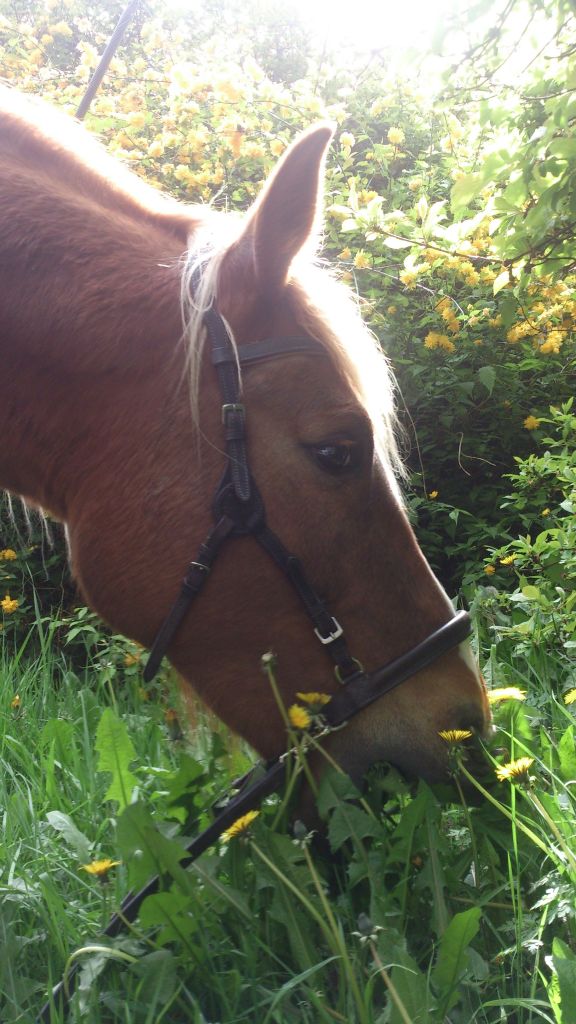
I first started exploring bitless bridles with my own horses with a mare I had when I was in my early twenties. She was unhappy in her mouth, and because my boss at the yard I used to work at had a couple of horses that were ridden in a hackamore, I thought it was worth exploring. I had already been researching the impact of the bit on horse welfare as part of a pilot study for my PhD and had a Dr Cooke Bitless Bridle that we’d had to order from America because they weren’t available here at that point. So I decided to try that on her. For a variety of reasons my PhD morphed away from bits and into temperament assessment (horse personality), but that’s another story. Anyway it left me with a lot of thoughts about the equipment we put on horses heads.
Shortly after this, I started training with a wonderful lady called Gloria Pullan. She was an Alexander Technique teacher and a BHS qualified riding instructor who had trained extensively with two former pupils of the Spanish Riding School, one of whom had also trained with Nuno Oliveira. So she was very classical, but with the addition of the Alexander Technique, very aware of balance and feel. With her, I realised that there was so much more to pressure and release than just timing. I learned what feel really was, how to make contact and connection with the horse in a way that didn’t create resistance because it wasn’t sufficient pressure to be aversive, so didn’t create resistance. The aids became all about lightness, balance and thought and I found out what riding from the seat really means. I didn’t suddenly become an amazing rider, but I became a much more thoughtful and feeling rider. This sat so well with my continued exploration of learning theory, emotion and motivation, begun during my Psychology degree studies.
What has this got to do with bitless riding? Well it made me realise that bitted or not, using strong pressure on the reins to hold a posture, or force obedience to aids, whether that acts on the mouth or the nose, was never going to be pleasant for the horse.
Yes, there are of course many issues with bits and over the years I’ve ridden many of my horses without them, but in some cases I have had horses that seem to prefer reins on a bit to reins on a noseband, so I feel it is important to listen to the individual horse and what they feel most comfortable with.
Key is ensuring that the way in which the reins are used is not aversive. In other words, it’s the posture, seat and balance of the rider and how that impacts on the hands that hold the reins that is key.
In my opinion there is no place for strength in riding. If a rider needs to use strong aids, whether that is the hands or the legs, then there is something missing in the training or preparation of that horse, or therideris sitting ina way that inhibits them. Most often, they are not relaxed with what is happening, or not fit enough for what they are being asked, or not in sufficient balance (emotionally and physically).
So I do feel rather uncomfortable when I see people advocating riding bitless, but still using strong pressure through the reins and on to the horses nose, forcing the horse into submission.
This isn’t necessarily any better than using a bit.
What about those that advocate removing the bridle altogether?
I first began exploring bridleless riding with my mare Rosie who I bred and backed myself. I had literally sat on her a handful of times, when I began training her with no tack at all.
For me, the thing that I wanted to explore with her was how I could train the aids (or cues) purely through positive reinforcement, without pressure at all, from scratch. So the key difference here was that I was starting completely from scratch, with a horse that had no riding experience, not taking a horse that was already experienced at being ridden conventionally, that would already have an understanding of the aids taught with pressure, and obedient because they’d learned they couldn’t say no.
I was sitting on what was eventually 16 hands of connemara sport horse cross, with nearly 50% thoroughbred in there, who had been trained and handled positively from the start, very little fear of anything, super confident, expressive and aware that she had choice. I was working in the field with her mum and her friend, because at that point that was the only training space I had.
I can tell you now that I felt safer sitting on that mare than probably any of the horses I’d ridden in the previous ten years because she loved what we were doing. I would climb on the gate and she would come over immediately and present her back to me.
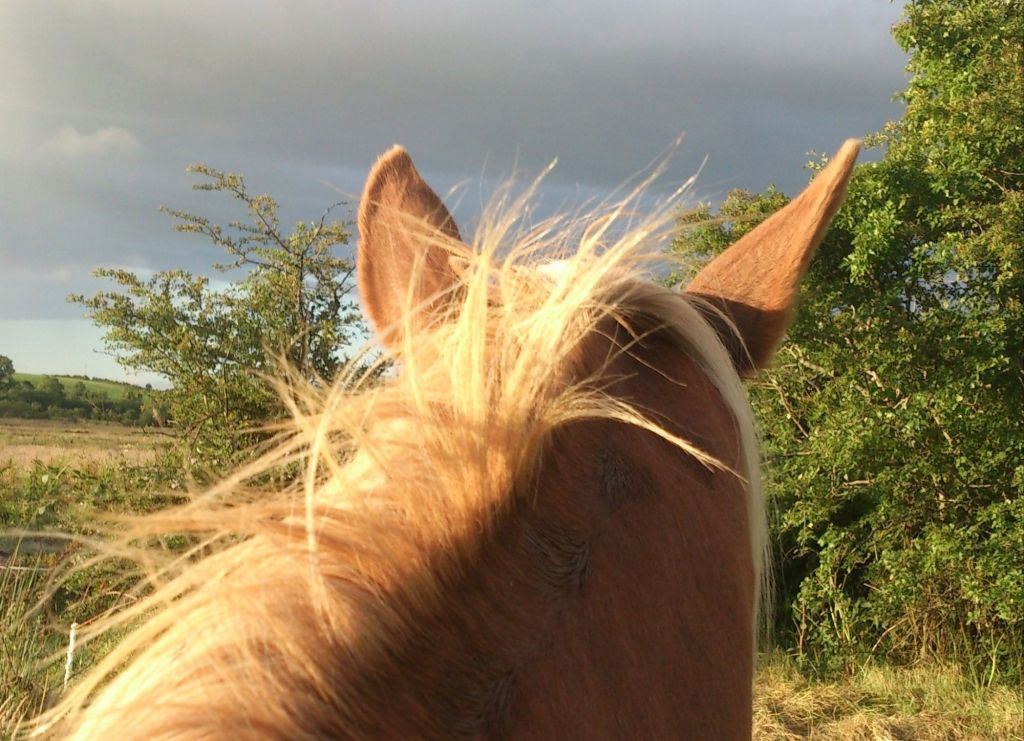
So I trained voice and leg cues for walk on, trot, cues for left and right flexion (a finger point) and a verbal whoa/ downwards transition. No pressure anywhere, all shaped using positive reinforcement (scratches, which she loved, and food rewards, combined with a marker signal for clarity of timing, I used a clicker because I particularly like it for that kind of thing and have been training with a clicker since the late nineties).
I never really got to develop this as far as I would have liked, for a variety of reasons, and Rosie sadly is no longer with us. But it showed me just what it is like to have a willing partner.
Over the years I’ve backed a number of horses using these principles, but still wearing tack. I use positive reinforcement to train the responses to traditional aids. They are light and responsive and I have never needed to carry a whip or use stronger aids with them.
Going back to the current trend for riding bridleless but with a neck rein or rope.
So many videos that I have watched have shown the rider move the rein up the neck and exert pressure to slow or control the horse. I find this incredibly uncomfortable to watch. I’m not sure how half strangling a horse is considered kinder than riding with a bridle? We are still using threat and a highly aversive stimulus to control behaviour.
In fact, one of the few trainers that I see regularly posting videos of bridleless riding that does not involve pressure on a neck rein is Connie Colfox. Connie is a long time friend and client of mine and Connie has been training this kind of work for years using positive reinforcement.
From a health and safety perspective I don’t tell people to go and ride bridleless. As we all know, any kind of riding is risky and you need to be very aware of the emotional state of your horse and the likely environmental stressors.
But I would tell you all to go and explore the principles of training these cues with positive reinforcement. You can still ride with a bridle, bitless or bitted, or a neck strap if you wish, but only have the pressure there for emergencies. Focus instead on making the cues not reliant on pressure, but trained through positive reinforcement.
I have a few clients that have riding lessons with me and this is exactly what we focus on.
I would love to see more professional trainers embracing this viewpoint.
I have a series of online and in person courses launching in 2026 that will guide you through all the learning that you need to be able to do this effectively.
To stay up to date sign up to my mailing list
Sign up for my mailing list
 Spence Horse Sense
Leave a comment