As a child and teenager I suffered terribly with back pain. Despite physio and chiropractic, nothing really seemed to make much of a difference. I slept badly, I struggled with standing still for any length of time, my back was weak and I just couldn’t seem to get it stronger.
Then, in my early twenties, I discovered the Alexander Technique. My mare at the time, Geri, was very sensitive and I was really struggling to get her comfortable and happy. I was on an equine behaviour training course at the time and one of the other attendees was an Alexander teacher. She suggested that it might be a good idea to look at my own back problems…. to help myself in order to help Geri. I was very lucky to have an excellent Alexander teacher living locally, Colin Beattie. After years of being told by various professionals ‘Oh yes, I can fix you’… then ‘oh no, maybe I can’t’, Colin was the first to say ‘I can help you learn how to help yourself’. The attitude was a breath of fresh air. The Technique itself was rather bewildering at the start, as we worked on standing up and sitting down, crawling and lying down.. all things I thought I knew how to do.
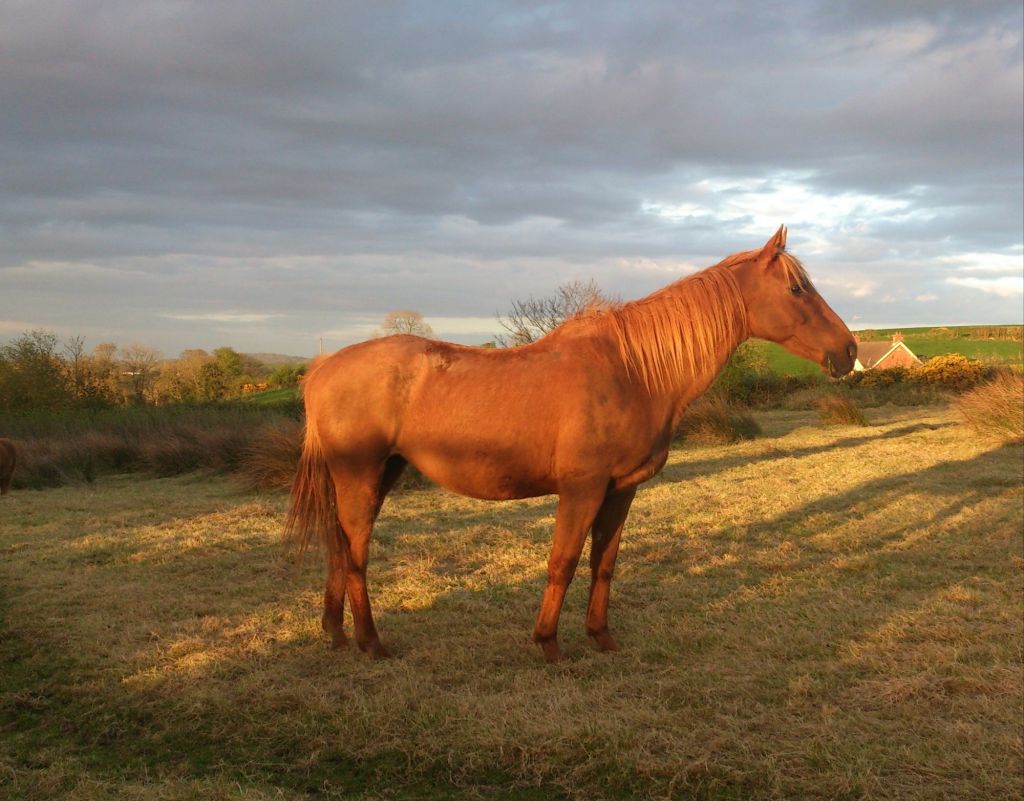
Gradually, with very little verbal instruction, but many many lessons, my body started to understand what it needed to do. I began to feel more unified, more connected. I became much more self aware. I could recognise where I was holding tension, and perhaps more importantly, I could release it. I found myself in better balance. Not only that, but I started to recognise the same thing in the horses I worked with. I could ‘feel’ where they held tension and help them release it, more importantly I could recognise the point where pressure created resistance and work below that, a valuable tool to add to my positive reinforcement tool kit. I started to recognise what good ‘feel’ really is.
Colin then introduced me to Gloria Pullan. Gloria was an Alexander Technique Teacher with an excellent grounding in classical riding, having trained extensively with Daniel Pevsner and Charles Harris, both Fellows of the BHS and both former pupils of the Spanish Riding School back in the 1970’s. Daniel Pevsner had also trained with Nuno Oliveira and was himself an Alexander Teacher.
I still consider how blessed I am that my back problems led me down this route. Over a period of a couple of years I organised regular riding and Alexander clinics with Gloria, rode as many different horses with her as I could and observed all her lessons. What I learned was life changing. I felt like I learned to ride all over again from scratch. But what she was teaching me made so much sense, it just worked. Truly riding in lightness, and it sat so well with my growing understanding of horse behaviour and training.
As I’ve said before, my focus when I work is on having a happy, relaxed, confident, engaged horse. Through the lessons I’d learned about posture and position, I had found a way to ride that really complemented that. Adding in my positive reinforcement training skills and my ability to read the horse meant that I had found a way of coaching riding that I was comfortable with.
The big question at the moment seems to be “should we ride horses at all?” I still believe we can and that we can do so in a way that not only is not bad for the horse but is actually a positive experience for the horse. I remember Gloria saying good riding should be like giving the horse and Alexander lesson. Helping them to find better balance and flow through their bodies. I know the technique helped me, so surely riding this way could benefit the horse. Then, of course, we know that good welfare isn’t just about avoiding poor welfare. It’s about positive, life enhancing experiences. Good training can do this through actually creating positive mental well-being.
So yes, I believe there is a place for interacting with horses, and yes, I believe that riding can definitely be a positive experience for them, if we are mindful of what we do.
As I further developed my understanding of training and posture and balance, I explored more ways of working on myself. Yoga, Tai Chi, Mindfulness, and just all-around better fitness and strength. In my late thirties, I was diagnosed with hypermobility, which explained so many of the issues I had had growing up. I was weak, over flexible, and found it hard to build strength. Normal training programmes made me worse, not better, so I had to work really slowly and carefully when building fitness. Nowadays, physios have a far better understanding of this so through the use of resistance bands, they have really helped me develop my strength while retaining suppleness.
As I was putting this all together, I started to explore in hand work as a way of helping the horse develop physically. I had dabbled with this as part of starting young horses with positive reinforcement when I was in my twenties, but I really started to go into it in more depth when I had a few clients with horses with issues that needed rehabilitation and I worked with them under supervision of their vet who was recommending remedial work.
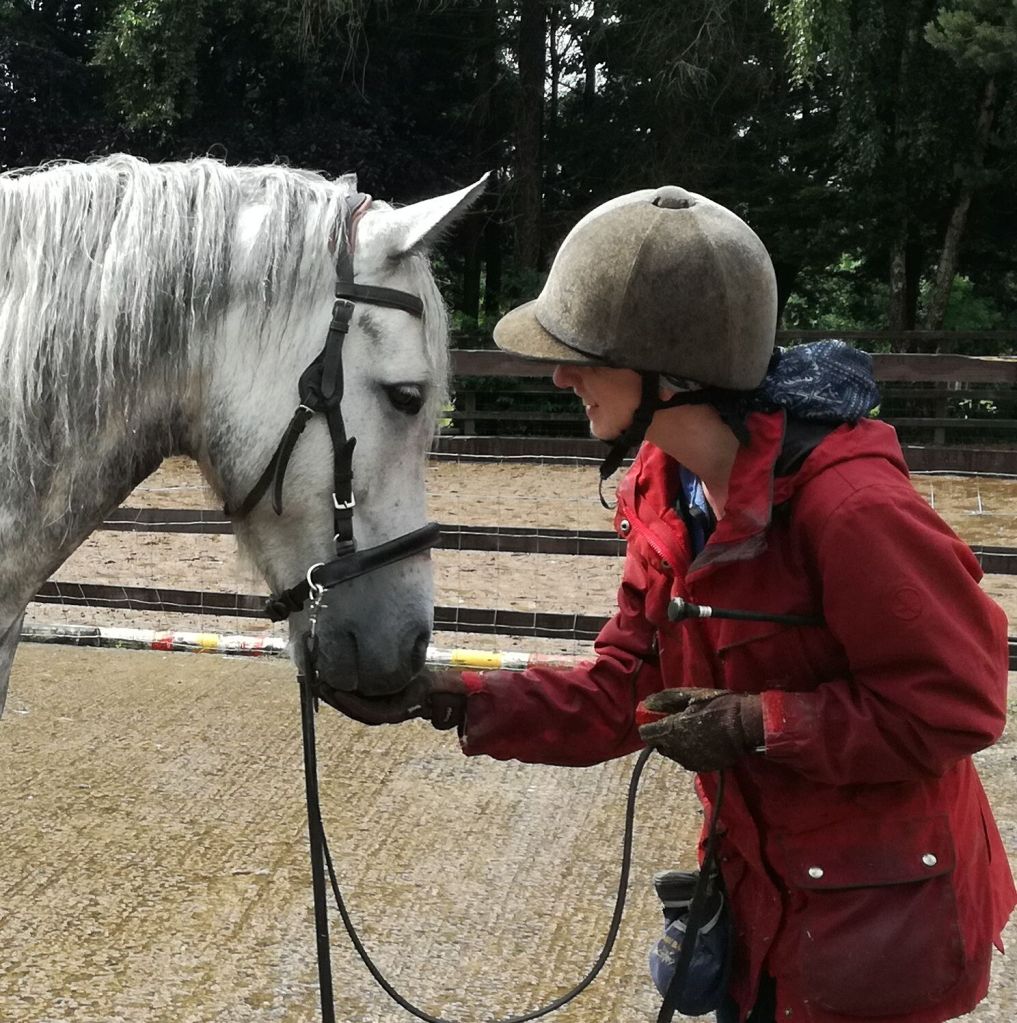
Immediately, I could see the benefits of the Alexander Technique and my awareness of posture. Even though we were working on the ground with the horse, our posture influences them, just like in an Alexander lesson. So by helping those that I taught find their balance, we helped the horse, too. Now, just to be clear, I’m not an Alexander teacher, just a long time student, but I did find that the lessons I’d learned really helped me with the people and horses I coached. Add in to that my experience as a trainer using positive reinforcement and I could see huge benefits for both horse and handler, a way of teaching groundwork that encouraged engagement (emotional, mental, physical) and balance. In 2019, I started to present a few workshops, sharing what I’d learned on the subject, but then, of course, covid came along.
Of course, since then, I’ve studied further and learned more about biomechanics and soundness/ expressions of discomfort, so there’s even more to add in there. As well as rehabbing myself from spinal injury and surgery! I can honestly say that it was the lessons learned from the Alexander Technique that helped me get back on my feet so quickly. It has definitely changed my life for the better, but it’s not the only way, just one of the many ways that help us be more physically and emotionally aware and, in turn, help our horses. I’m hoping to get some more workshops along these lines. up and running over the next six months, so please do get in touch if you feel this is something that interests you.


 Spence Horse Sense
Leave a comment